Ubiquitous Computing Technology Corporation

UCT — TRON Building OS

TRON Building OS
UCT Smart Building Control System

An integrated control platform based on the TRON Building OS concept
that simultaneously improves office comfort, energy efficiency and digital management

Overview About the UCT Smart Building Control System

Comfort and convenience for office workers

Numerous office sensors provide detailed environmental awareness. Smartphones can control lighting, HVAC, electronic locks, automatic doors, elevators, powered blinds and other equipment, while shared-space occupancy can be monitored in real time.

People working comfortably in an office

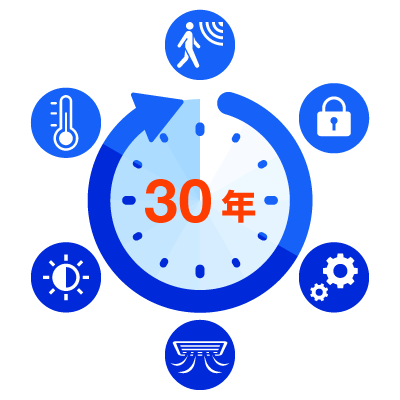
Current equipment control even after 30 years

Smart-building control software is updated continuously and evolves by incorporating AI and big data. Its cloud-based architecture provides flexibility and scalability, making it easy to add functions that conventional central monitoring systems cannot support.

Equipment control kept current after 30 years

Energy savings through detailed control

Detailed measurement and analysis of building conditions and occupant movement enables control that eliminates waste while maintaining comfort. Environmental sensors monitor CO₂, temperature, humidity, brightness and occupancy to maximize energy efficiency.

Energy savings through detailed equipment control

Technology that connects diverse equipment

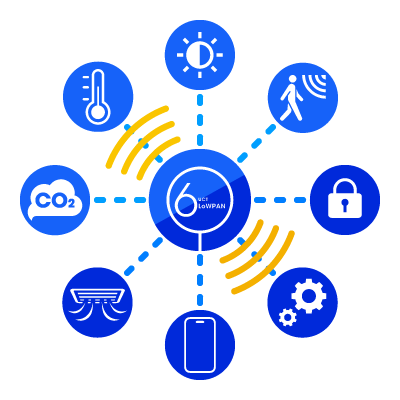
Any externally controllable equipment with disclosed specifications can be integrated into smart control. UCT also develops custom support for proprietary or specialized devices, and 6LoWPAN IoT routers enable centralized management of wireless IoT equipment.

Technology connecting diverse building equipment

Architecture TRON Building OS and System Architecture

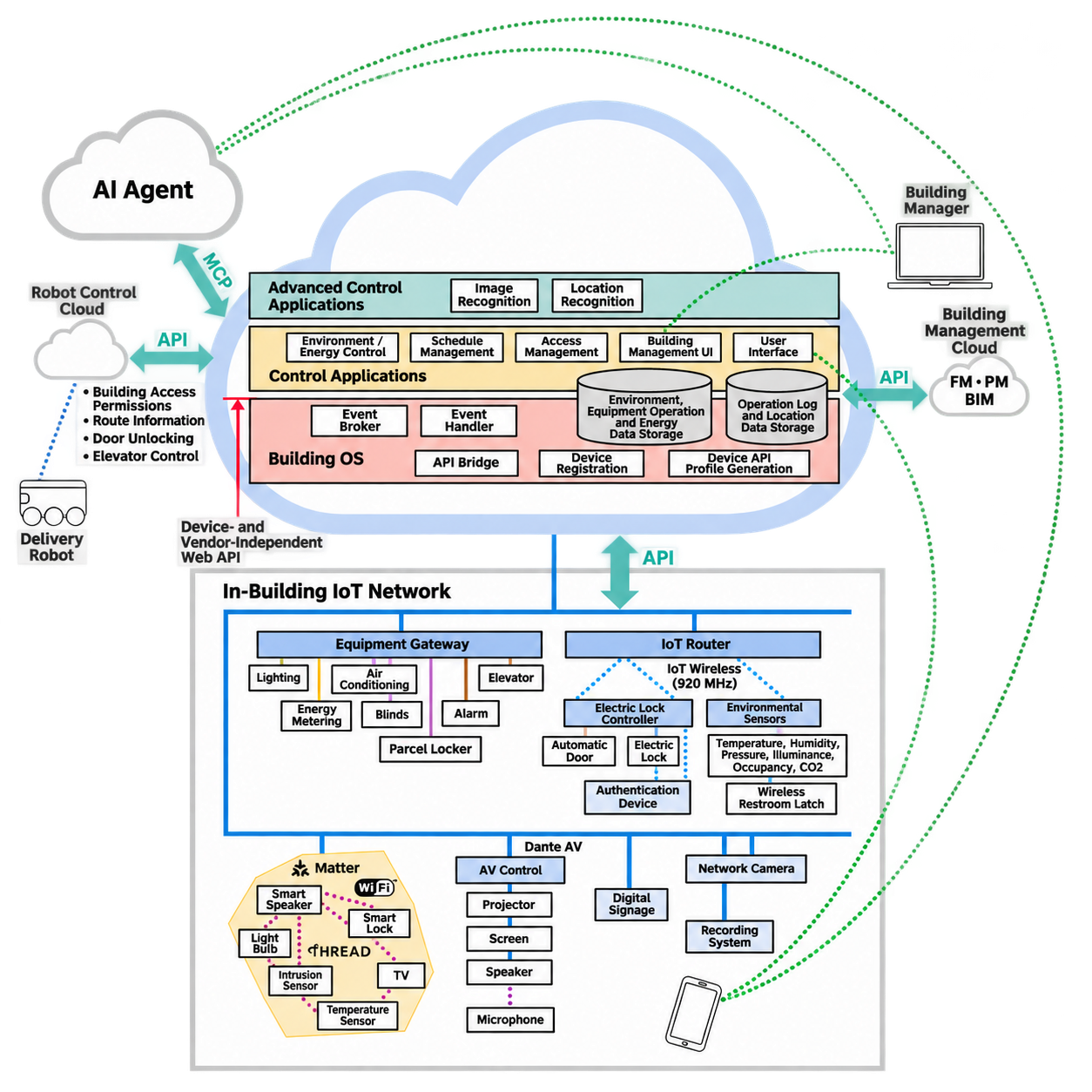
UCT smart-building control system architecture

Building OS (device virtualization layer)

Vendor- and device-specific APIs are presented to applications as a unified, vendor-independent API. Device profiles are described in OpenAPI Specification (OAS) format, avoiding major application rewrites when equipment is replaced with products from another manufacturer.

Controller applications

Functions traditionally handled by central monitoring equipment are implemented in the cloud, including schedule management, remote control, smartphone applications and service screens for building managers.

IoT device integration (920 MHz wireless)

The IoT router converts between Web APIs and low-power IEEE 802.15.4 IoT devices in the 920 MHz band. Compared with 2.4 GHz Wi-Fi/Bluetooth, the band is less congested and propagates around partition walls, providing approximately three times the Wi-Fi range in a typical office.

Business continuity measures

Large buildings can use both cloud and local servers. If cloud communication is interrupted, control is transferred to the local server so equipment operation can continue as a business continuity measure.

Advanced control and future development

Advanced control applications can analyze camera images to identify people, count occupants and assess congestion for FM/PM use. Development also covers Matter devices and cloud-to-cloud integration with delivery robots, including automatic entry authorization and elevator access.

Devices Control Devices

Contactless switch

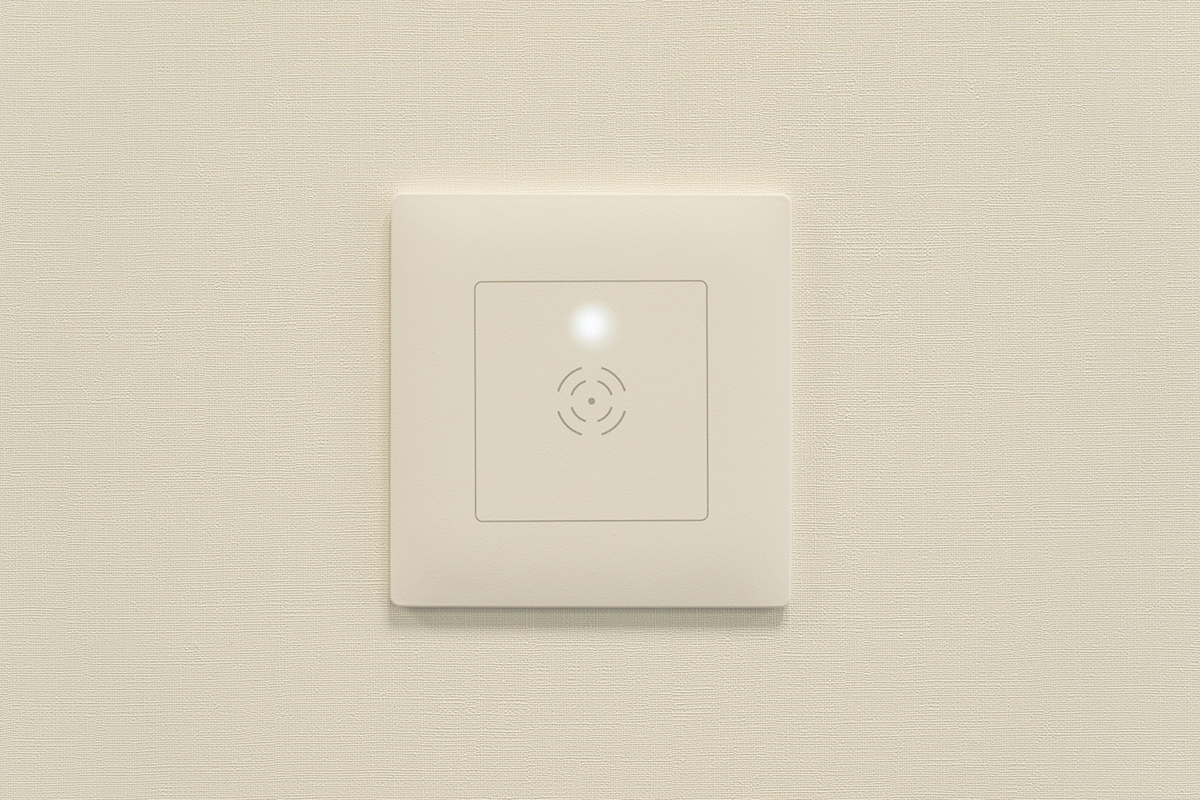
This contactless switch responds when a hand approaches within a few centimeters. Connected to the server over 6LoWPAN IoT wireless, it can serve many purposes, such as switching lighting and HVAC on or off together. It can also report whether web-conference booths are occupied or vacant for congestion display and management.

A contactless switch installed on a wall

Building control by smartphone

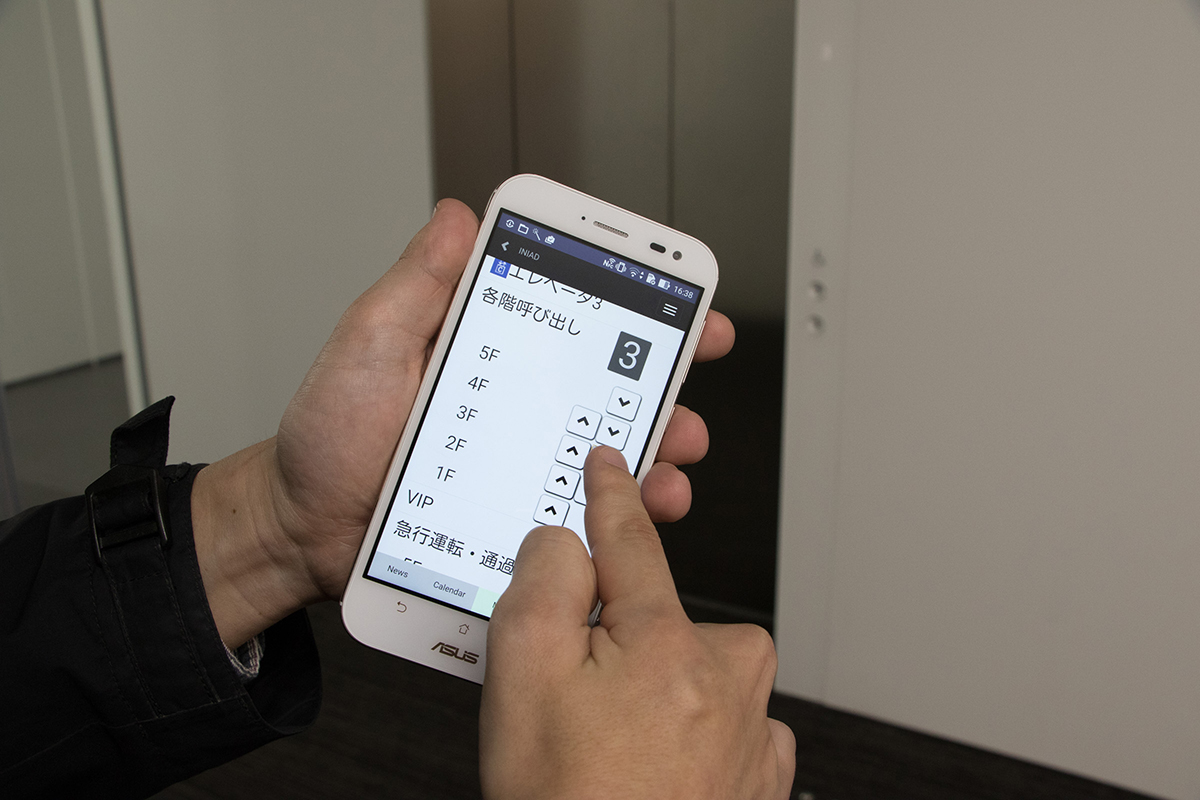
On the smart-building platform, a smartphone becomes a building-control device. In addition to lighting and HVAC, users can call an elevator and select a destination from their phones.

Operating an elevator from a smartphone

Robots

Delivery robots are now being tested in many locations. As robots begin entering buildings and carrying packages to their destinations, cloud-to-cloud integration between the robot service and the TRON Building OS-based control system can authorize building access and support automatic elevator use.

Ministry of Land, Infrastructure, Transport and Tourism barrier-free navigation project
A demonstration in which a delivery robot uses public elevators along its route to deliver a package